
Penal Code 832.18 PC - Police Body Cam Polices in California
California Penal Code 832.18 regulates the use of body-worn cameras (BWCs) by law enforcement. It mandates that BWCs be activated during public encounters such as traffic stops, arrests, searches, and questioning.
The law also establishes policies on data retention, access, and storage, specifying that all recorded footage is the agency's property and cannot be accessed or released without authorization.
The law requires that records or logs of access and deletion of recordings be kept permanently. BWCs must be turned on during any interaction with the public, and all recorded data belongs to the law enforcement agency.
Unauthorized access or sharing of data, such as for personal use or public posting, is forbidden. All video and audio files must be stored for at least two years.
Policies for Storing BWCs
The law specifies policies for storing BWCs, covering storage locations and data security. It also sets penalties for violations. While officers are generally required to activate BWCs, exceptions apply when their safety is threatened.
The legislation aims to balance transparency with privacy, allowing for redaction of sensitive details from recordings.
California law is evolving to regulate the recording of individuals during medical or psychological evaluations, procedures, or treatments. Law enforcement agencies are required to establish policies and procedures for the use and storage of BWC data.
Critical Tool in Modern Policing
Body-worn cameras have become essential in modern policing, recording interactions between law enforcement and the public to promote transparency and trust.
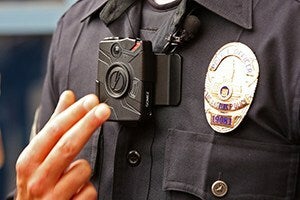
When used properly, they provide a clear account of contentious incidents, offering reassurance to everyone involved.
Despite their benefits, clear laws are necessary to regulate their use and prevent the misuse or mishandling of recordings.
California Penal Code 832.18 PC establishes statewide rules for how law enforcement agencies should operate, store, and manage footage from these devices.
Understanding this law is particularly important if you're facing a criminal accusation, since police violations of these rules could directly affect your case.
PC 832.18 specifies what law enforcement agencies must do concerning body-worn cameras, covering policies and procedures for downloading, storing, and handling recordings.
This law outlines best practices for managing body-worn camera data, including assigning responsible personnel for downloads and creating procedures for data security and retention.
Section 832.18 requires police agencies to develop written policies and procedures for body-worn camera use that cover data download, storage, and access.
What Policies Are Established Under PC 832.18?
Policies should be rooted in best practices, such as assigning specific individuals for data downloads, setting clear timelines, and implementing safeguards against data tampering or unauthorized access.
Additionally, the law emphasizes data security measures to prevent unauthorized access, alteration, or deletion of recordings. It also specifies retention requirements that may be extended if recordings serve as evidence in criminal cases.
Furthermore, it highlights the importance of categorizing and tagging body-worn camera videos for easier retrieval and organization.
PC 832.18(a) states, "The Legislature intends to establish policies and procedures based on best practices to address issues related to downloading and storing data recorded by a body-worn camera worn by a peace officer."
(b) When establishing policies and procedures for the implementation and operation of a body-worn camera system, law enforcement agencies, departments, or entities shall consider the best practices regarding the downloading and storage of body-worn camera data."
Penal Code 832.18 establishes particular standards for law enforcement agencies in California. Here we will review some of the law's key provisions and their relevance to police departments.
Required Written Policies for Body Camera Usage
Under PC 832.18, all law enforcement agencies that use body-worn cameras must create a written policy outlining their use. These policies need to cover essential topics such as:
- When officers need to turn their cameras on or off.
- Indicates where cameras are allowed or forbidden, such as in sensitive areas like private homes or hospitals.
- How officers will store and preserve video footage.
- Rules for accessing and reviewing the footage, especially during investigations.
Importantly, the law mandates that these policies be accessible to the public, promoting transparency in how body cameras are handled.
Review of Footage by Officer
The law usually permits officers to review body camera footage before completing their reports to ensure accurate incident recounts.
However, in cases involving serious misconduct or use of force, like an officer-involved shooting, specific restrictions might apply.
If the officer is being investigated as a suspect or witness, their access to footage may be temporarily restricted to protect the integrity of the investigation.
PC 832.18(a)(1) states, "Designate the person responsible for downloading the recorded data from the body-worn camera. Suppose the storage system lacks automatic download capability. In that case, the officer's supervisor should take immediate physical custody of the camera and should be responsible for downloading the data in the case of an incident involving the use of force by an officer, an officer-involved shooting, or other serious incident."
Retention Policies for Video Evidence
The law also sets clear rules on how long agencies must retain body camera footage.
- Video recordings of routine incidents should be kept for a minimum of 60 days.
- In cases of serious incidents, such as officer-involved shootings or use-of-force complaints, footage must be retained for a minimum of two years.
This guarantees that essential evidence isn't destroyed too early, allowing prosecutors and defense teams enough time to examine the material.
PC 832.18(a)(2) states, "Establish when data should be downloaded to ensure the data is entered into the system in a timely manner, the cameras are properly maintained and ready for the next use, and for purposes of tagging and categorizing the data."
"Evidentiary data" refers to information collected from an incident or encounter that can assist investigations. This includes, but is not limited to, crimes, arrests or citations, searches, use-of-force incidents, or confrontational encounters with the public.
Tampering is Not Allowed
Under PC 832.18, it is strictly prohibited to tamper with body camera footage. Officers must not edit, delete, or alter recordings in any way.
Violations can result in serious consequences, including internal disciplinary action or criminal charges. This strict enforcement safeguards the integrity of the footage and protects all parties involved.
PC 832.18(a)(3) states, "Establish specific measures to prevent data tampering, deleting, and copying, including prohibiting the unauthorized use, duplication, or distribution of body-worn camera data. (4) Categorize and tag body-worn camera video at the time the data is downloaded, classifying it according to the type of event or incident captured in the data."
Public Access to Footage
The law sets forth rules for publicly disclosing body camera recordings. Although it includes measures to safeguard privacy and safety, footage can typically be released on request when there is public interest.
This transparency enhances accountability and helps reassure the public about the management of law enforcement incidents.
PC 832.18 states, "(8) Require that all recorded data from body-worn cameras are property of their respective law enforcement agency and shall not be accessed or released for any unauthorized purpose, explicitly prohibit agency personnel from accessing recorded data for personal use and from uploading recorded data onto public and social media internet websites, and include sanctions for violations of this prohibition."
Why You Need a Criminal Defense Lawyer
If you're facing criminal charges in California, how law enforcement manages body-worn camera footage can significantly impact your defense. An experienced California sex crime defense lawyer will examine whether the police complied with the standards outlined in PC 832.18.
Here are some examples of how breaches of these regulations might work in your favor.
- Challenge Evidence: Body camera footage often serves as crucial evidence in criminal cases. However, mishandling or failing to preserve this footage by law enforcement may render it inadmissible in court. For example, if an officer illegally disables their camera or tamper with the footage, it could invalidate important evidence against you.
- Procedural Misconduct: When police officers break body camera rules, it suggests they are not following proper procedures. Defense attorneys can exploit these violations to cast doubt on law enforcement's credibility. For instance, if officers do not record an encounter as mandated, your lawyer can argue that the absence of footage undermines their version of events.
- Bias or Cover-Ups: Manipulating or selectively releasing body camera footage can imply officers are distorting facts. Emphasizing this point might help your attorney challenge the prosecution's case, potentially leading to dismissed charges, a favorable plea deal, or an acquittal.
- Access to Evidence: A defense attorney can utilize PC 832.18 to guarantee your access to all pertinent body camera footage. If police do not release or improperly withhold video evidence, your lawyer can submit a motion to force its disclosure. This helps ensure a fair trial and prevents evidence from being concealed or destroyed.
For more information or a case evaluation, contact the Hedding Law Firm in Los Angeles.
Related Content: